Sunday, February 25, 2007

New Plants


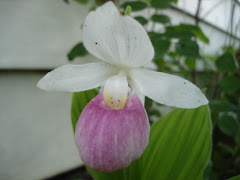
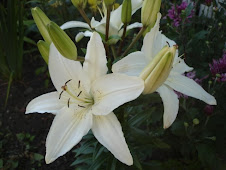
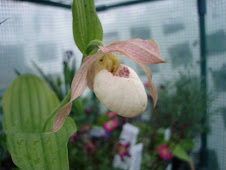
I got three new plants at the show this weekend: Phrag schlimii 'Wilcox' AM/AOS (first 2 pics), Phrag Sedenii 'Blush', and Paph Pinocchio x primulinum (last pic).

Pharg schlimii 'Wilcox' is a famoulsy misnamed clone that is over 100 years old. In reality it is guessed to be either Cardinale or Sedenii but its true parentage is unknown. As for my opinion, every Cardinale or Sedenii I've seen (except for ones labeled that way that are actually this clone) look nothing like this so I don't think it's either. It'll be interesting to see what my new Sedenii looks like when it blooms! Either way, this clone in my opinion represents the very best in Phrag breeding.

The primulinum cross is my first Cochlopetalum type paph so I'm quite excited about that, because I really like them. These types bloom sequentially and are nice and compact.

Show Pics 3


Paph Norito Hasegawa, Phrag besseae 'Wings of Fire', Paph concolor, Paph delenatii.

Show Pics 2


Paph Lola Bard, Cypripedium parviflorum, Paph Pinocchio x bellatulum, Paph Winston Churchill x gratrixianum

Orchid Show Pics 1


From top to bottom: Phrag caudatum (1st 2), Phrag besseae 'Fire Engine' x 'First Choice', Phrag schlimii, Paph Gina Short.

Monday, January 22, 2007

Paph (S. Gratrix x bellatulum) x micranthum


This is my newest and most unexpected orchid purchase. It's an amazing parvi influence hybrid with some brachy parentage. It greatly resembles Magic Lantern and even more so micranthum itself... wow! It has a HUGE pouch. This flower is over 4" across, but the plant is only 6" tall and has a leafspan of 6"! I paid $40 for this one.

My First Awarded Orchid


Paph. Z4135 x charlesworthii, pictured here, is my first orchid to receive an award, at my society's meeting this past weekend. The ribbon is for First in Class Paphiopedilum. I bought it in flower in August 2006 and couldn't believe it flowered again so soon.

Tuesday, January 09, 2007

Paph. Z4135 x charlesworthii - New Flower

I posted before that this plant was developing a spike - about a week ago the bud opened. I'll be posting photos, along with a little story, soon.

Phragmipedium schlimii - Great News

I've been worried lately about my Phrag. schlimii. I got a good deal on it; I took a gamble on a pretty yellow plant with short leaves (snipped). However, just as I hoped, it's now forming two new beautiful growths and seems very happy in its rookwool. Woohoo!

My Last 2 Orchids

This winter/spring I'll be buying my last 2 orchids for a while... until I can get more space. The scoop is that Orchids in Our Tropics finally got back to me about the Phrag. schlimii (Cardinale) 'Wilcox' AM/AOS and they'll be bringing it to the orchid show I'll be attending next month. The other one is, as I've already said, my Phrag. kovachii seedling, which has already been ordered from Green Canyon and will ship in May. In total this last investment will cost me $150 ($75 each).

Sunday, December 31, 2006

Bird of Paradise Culture

The bird of paradise is a popular and well-known subtropical plant. Its exotic, orange flowers are unmistakable. In warm climates it's actually a common garden plant, and in cooler climates it makes a good houseplant, a patio plant during the summer. These plants are expensive blooming size but can sometimes be found cheaper as younger plants. Not only are they usually imported, but take at least 3-5 years from seed to reach marurity; this is the reason for their high prices. Seed is readily available but difficult to germinate.

As a houseplant, the bird of paradise likes bright light and as such makes a great heated sunroom plant. South and west windows work too. Outside it prefers full sun. It should be watered generously in the summer, less in winter. Bird of paradise does not like dry soil. Fertilizer should never be applied copiously as this causes excessive foliage and few flowers. However, the occasional feeding (every 2-3 weeks, less in winter) is needed. Use a balanced all-purpose formula. This plant likes to be potbound and as such should only be repotted if absolutely necessary. They seem to flower more in this state. Use a high quality potting soil mix or tropical mix. Bird of paradise usually flowers from late winter into summer, but they can bloom throughout the year. The flowers last several weeks.

There are three main bird of paradise species, Strelitzia reginae (common bird), S. alba (white bird) and S. nicolai (giant bird). A popular variety of S. reginae, 'Mandela's Gold', exists which has a compact habit and exceptionally bright flowers. Both S. alba and S. nicolai have larger, white flowers, and have a larger habit than S. reginae; S. nicolai grows much like a tree and can reach 30 feet in height. It obviously doesn't make a very good houseplant. S. reginae grows 3-4' tall and S. alba grows 5-6'. S. alba is commonly seen in nurseries, often mislabeled as S. nicolai. The distinguishing feature of S. nicolai is its tough trunk.

The easiest method of bird of paradise propagation is by divison. Only divide large, mature clumps. Divisons can take 1-2 years to bloom. Seed propagation is another method. You can buy a package of seeds pretty much anywhere for around $5, compared to prices of mature plants up to $250 that I've seen. However, seed propagation is a slow process that requires much patience. By no means is it as complex and skill-demanding as orchid seed propagtion, but it isn't like sowing sweet peas. The seeds are about the size of sweet pea seeds though, and have a hard covering, and an orange tuft of hairs on the end. They must have these tufts removed, then be soaked in lukewarm water for 24 hours, and scarified with a file or knife. At this point the seeds should be lightly pressed into a 1:1 mix of sand and potting soil, and kept moist and humid under a dome, in diminished light and at room temperature. They will take 1-3 months to germinate. Once the seedlings have 3 or 4 true leaves, they should be pricked out and planted in small pots of seedling mix. They should then be repotted as needed.

Follow-up to Amaryllis Culture

The above photo shows a close-up of one of the flowers on my Hippeastrum Hadeco 'Symphony Red'. It is 7 inches wide. This is my only amaryllis, in its second year under my culture. Next year I plan to increase my collection of these.

Friday, December 29, 2006

Amaryllis (Hippeastrum) Culture


I wanted to do this at Christmas but never got down to it. Amaryllis have become popular plants to keep indoors at this time of the year. The Amaryllis I refer to are not true Amaryllis, but are rather members of the genus Hippeastrum. However, they closely resemble Amaryllis.

You usually buy Amaryllis in the form of a planting kit which includes a bulb, pot and soil, complete with planting instructions. It's also common to see them as potted plants. The care of these plants is quite simple, but few people know how to keep them as perennials and most often throw them out after flowering.

Care before flowering

When you pot the plant you should plant the bulb so that the neck is above the soil surface, and the part where the bulb starts to round is just below the surface. Amaryllis are prone to rot at the neck, where water can get lodged in the bracts from previous growths. This is why it must not be under the soil. After potting, the soil shoild be kept barely moist. It is probably best to water from the bottom to keep the neck dry. Amaryllis roots grow from the bottom of the bulb; this is the only part of the plant that likes water. The plant should not be watered until the soil has dried to this point; check with a toothpick. As far as light goes, the plant doesn't need bright light at this point because it won't really grow leaves until after flowering. In fact, bright light will produce small flowers or none at all. As for fertilizer, don't until after flowering. And temperature - standard room temps. 20-25C is ideal (during the day), with a 5C difference day-night. Temps down to 10C at night can be tolerated; I recommend around 15C. These conditions are easy to achieve in the home. Six to eight weeks after planting, your plant will flower. You'll notice a thick, hollow stalk topped with a large "bud" appear and grow over time, perhaps along with some leaves (which very seldom fully develop before flowers) or another bud (or two or three). This "bud" will eventually open to reveal several true buds. As the plant ages, more flower stems will develop every season. Each lasts nearly two weeks and they usually open in succession, so the older the bulb the longer the season.

Care after flowering

After flowering, the plant will produce one or more fans of long leaves. The plant makes an attractive houseplant even when not flowering. It should stay green for several months, entering dormancy around August or September (providing it flowered in December or January). In the house (while it's still cold outside), place it near a sunny window, but avoid direct sun. Water in the same way as before, and fertilize every two weeks with a balanced all-purpose formula. In June the plant can be put outside (and should be) to enjoy fresh air and natural temperatures. Keep it in a dappled shady location. Bring it inside before first frost, but it will likely lose its leaves before then. At this point the pot should be dried out and put in a cool place (5-10C) for at least 6 weeks. You can also un-pot the plant and place the bulb in a sealed poly bag, in the crisper drawer of a refrigerator. Keep it dry during dormancy. Note that the bulb should never be frozen! After six weeks have passed, you have the option of repotting the plant and following care before flowering. Remember to pot 6-8 weeks before you want it to flower.


The picture at top is of my Hippeastrum Hadeco 'Symphony Red' as it appeared a couple days ago.


Phragmipedium schlimii New Photo

This plant bloomed many weeks ago but I just found this photo in my album; it's of higher quality than the others I posted and is of the second of two flowers produced.

Phragmipedium Saint Ouen

A popular Phrag hybrid. It bloomed some time ago but I never posted the photo.

Doritaenopsis (Dtps. Taisuco Okay Stripe x Phal. amabilis)

I like the candy striped Phal/Dtps hybrids.

Cymbidium Gung Hey Fat Choy 'Murasaki Gengi'

This Chinese Cymbidium hybrid, strangely enough, is a named clone of an un-named hybrid. Therefore since it's Chinese and blooming at New Year's, I named it "Gung Hey Fat Choy".

Monday, December 25, 2006

Phragmipedium kovachii Culture Notes

I attended Peter Croezen's presentation on this amazing plant last week and the following is what I learned.

Light
Seedlings must have low light at 400-450 footcandles. Higher light will cause fatal leaf yellowing.

Water
Use pure water (such as distilled, rain or RO). Keep moist but not soggy. They really like growing their roots into water; using PrimeAgra creates an environment that keeps the roots very moist but not too soggy.

Fertilizer
Use a mineral-rich fertilizer at 200ppm every week. Calcium, magnesium and boron are important.

Temperature
Keep a relatively constant temp. of 20C. Higher temps (above 24C) will cause fatal leaf yellowing.

Media
As newly deflasked seedlings, pot into a small 2" container, in sphagnum moss, and keep moist. When a considerable rootball is developed, pot up, into PrimeAgra or bark.

I have ordered a Pk seedling from Mr. Croezen.

Saturday, December 23, 2006

New Acquisition

I've developed a tradition of buying a "Christmas Orchid" every year. Last year this was Paph. (Valerie Tonkin x Maudiae). This year it's Cymbidium Un-named Cultivar 'Murasaki Gengi'. I'll be posting photos today.

Wednesday, December 20, 2006

Pictures on the Front Page

I've decorated the front page with some of my most-wanted slipper orchids. As they are acquired they will be replaced with my own photos.

Tuesday, December 19, 2006

2006 Year End Current Orchid List & Wanted List

Current List, with price paid for each:

Bletilla striata 1 $2
Bletilla striata 2 $2
Bletilla striata 3 $2
Bletilla striata 4 $2
Brassia Eternal Wind 'Summer Dream' $35
Cypripedium calceolus (?) $25
Cypripedium macranthos $25
Cypripedium parviflorum var. parviflorum $10
Cypripedium parviflorum var. pubescens 1 $25
Cypripedium parviflorum var. pubescens 2 $25
Cypripedium parviflorum var. pubescens 3 $20
Cypripedium parviflorum var. pubescens 4 $40
Cypripedium reginae 1 $30
Cypripedium reginae 2 $25
Cypripedium Ulla Silkens $60
Dactylorhiza purpurella $25
Dendrobium kingianum $20
Dendrobium unknown seedling $0
Doritaenopsis (Dtps. Taisuco Okay Stripe x Phal. amabilis) $20
Odontoglossum Tiger Crow 'Golden Girl' (?) $20
Odontoglossum Violetta von Holm 'Dominique' $30
Odontonia Memoria Martin Orenstein 'Lulu' HCC/AOS $30
Paphiopedilum (Carticle x Hsinying Maru) $40
Paphiopedilum (Claire de Lune x philippinense var. alba) $50
Paphiopedilum delenatii ('Jingle Bells' x 'Dark & Flat') $35
Paphiopedilum Ho Chi Minh $30
Paphiopedilum insigne 1 $10
Paphiopedilum insigne 2 $10
Paphiopedilum (Joyce Hasegawa x chamberlainianum) $30
Paphiopedilum (Ruby Peacock x Hampshire Raven) $50
Paphiopedilum (Valerie Tonkin x Maudiae) $55
Paphiopedilum (Yerba Buena x Golden Days) x spicerianum $30
Paphiopedilum (Z4135 x charlesworthii) $50
Phalaenopsis Maki Watanabe $30
Phragmipedium besseae ('Fire Engine' x 'First Choice') $45
Phragmipedium Ecua-bess $35
Phragmipedium Grande $65
Phragmipedium Saint Ouen $25
Phragmipedium schlimii $20

Total = 39 orchids, $1083 spent

Wanted List (In no particular order), bolded = most wanted:

(includes maximum value estimated)

Paphiopedilum micranthum $80
Phragmipedium fischeri $80
Phragmipedium kovachii $200
Phragmipedium Hanne Popow $50
Phragmipedium schlimii 'Wilcox' AM/AOS (Cardinale) $80
Paphiopedilum Magic Lantern $45
Cypripedium montanum $90
Cypripedium acaule $35
Cypripedium x andrewsii $80
Cypripedium Gisela $60
Cypripedium formosanum $45
Phragmipedium Ruby Slippers $55
Cypripedium kentuckiense $35
Paphiopedilum Armeni-white $45
Paphiopedilum villosum $45
Cypripedium Inge $60
Mexipedium xerophyticum $80

I also really want a couple complex paphs, one in red/pink shades and one in copper/orange/yellow shades (perhaps a white one too).